Solar FIT project at Wikwemikong
PROJECT HIGHLIGHTS
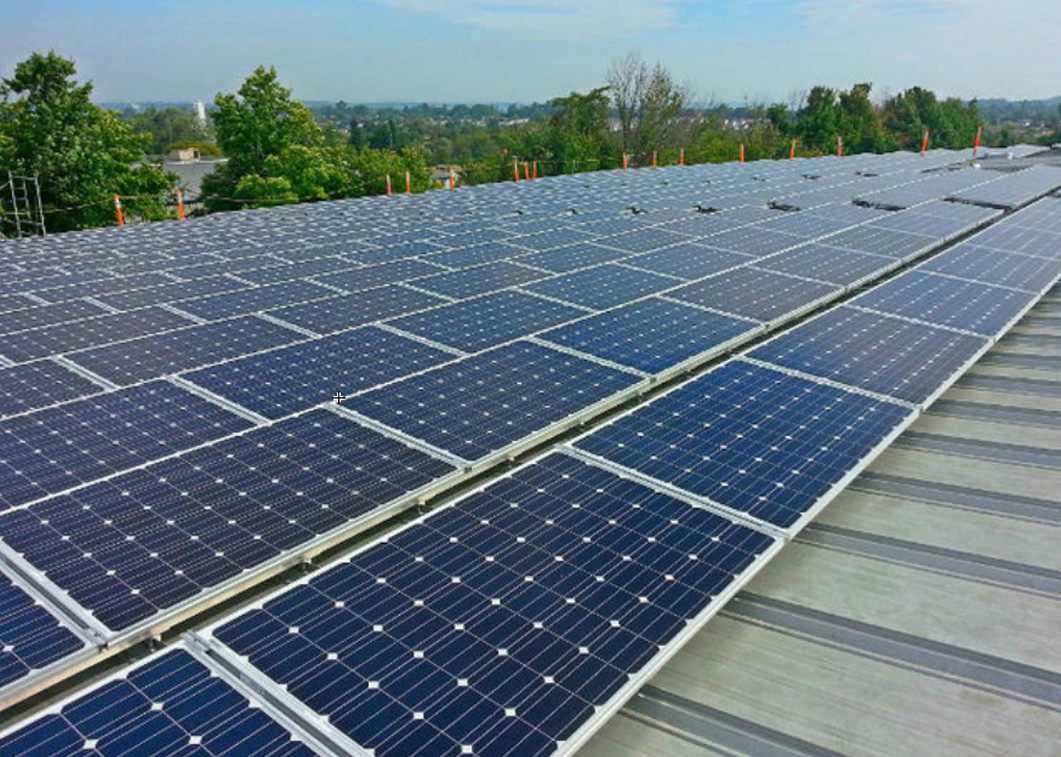
200 kW sized system will annually generate over 262,000 kWh of clean electricity for Ontario. It mitigates the effects of 150 tonnes of carbon dioxide each year. Equivalent to taking 30 cars off the road, diverting 55 tonnes of waste from the landfill and displacing emissions from 340 barrels of oil. Generated a number of construction, engineering and project management jobs, boosting local economic growth.
Learn more about the project through the interview with Mary Lynn Odjig on the following screens.
Solar case study: Overview
About Mary:
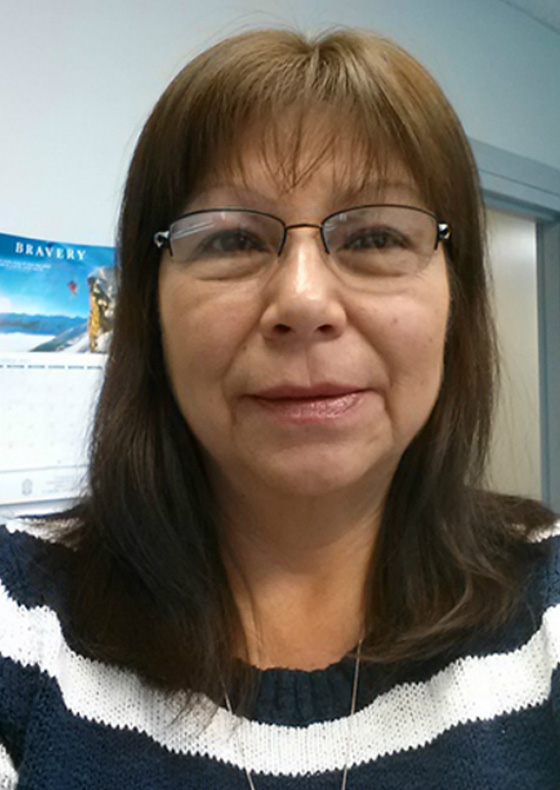
Mary Lynn Odjig is a permanent resident of Wikwemikong and has lived there for most of her life. In May 1988 she graduated from Cambrian College’s three year Business Administration Program. Upon graduation she was hired by the Wikwemikong Development Commission as the Band Job Developer.
During the course of her employment with W.D.C., she has worked in various capacities in employment, training and business development. In 1997, she was appointed as the General Manager/Economic Development Officer and her main responsibilities include the management of operations of the W.D.C. as well as the planning and economic development activities for the Wikwemikong Unceded Indian Reserve.
Mary Lynn is a proud mother of four and grandmother of five darling grandchildren. Throughout her life, Mary Lynn has participated and volunteered fora variety of organizations, such as the Debajehmuhjig Theatre Company, the Three Fires Music Festival, Minor Hockey and Figure Skating Club. When time permits, she enjoys reading, watching hockey and golfing.
Mary Lynn Odjig: Interview
Q1: How did Wikwemikong become interested in Solar Energy?
Wikwemikong has had an active interest in renewable energy for over a decade. Our community expressed very early on the necessity to explore and develop a strong renewable energy sector for our area.
One of the main focuses, besides wind power, has been solar energy. We’ve been developing local solar energy projects since 2012.
To date, we’ve completed a total of twelve micro-FITs and, partnered with a company and applied to the Ontario Power Authority’s FIT2 development.
Moving forward in energy development
Q2: How has Wikwemikong been able to move forward in solar energy development?
I don’t think our community would’ve progressed as quickly as it has if we hadn’t hired a local Energy Planner. Our Energy Planner reports directly to our economic development corporation, Enaadmaagehjik.
They are responsible for researching energy sector development, pursuing new energy projects and technology and keeping the Chief and Council abreast of all energy projects in our area.
Through conference participation, online research, and working with energy experts, the Energy Planner has been able to keep us informed of industry developments such as solar power generation.
Developing larger FIT projects
Q3: How did you start developing larger FIT projects?
During the OPA’s FIT 2 application announcement, we applied for a 750 Kw ground mount solar farm, and our consultant for this project also introduced us to a developer looking for partners for the FIT2 program.
The developer wasn’t looking for just any partner, or for that matter, any First Nation. They were looking for a partner who had previous experience in solar development and had financial strength and technical capacity.
Our partner had applied for 43 projects under FIT2, with many projects located in the Greater Toronto Area and Southern Ontario.
Managing with the developer
Q4: How did you manage the larger FIT project with the developer?
We were unsuccessful with our 750 Kw solar farm because our local electrical system was nearing its capacity. However, with our new partner we were approved for 11 Roof-top solar projects for a total of 1631 Kw.
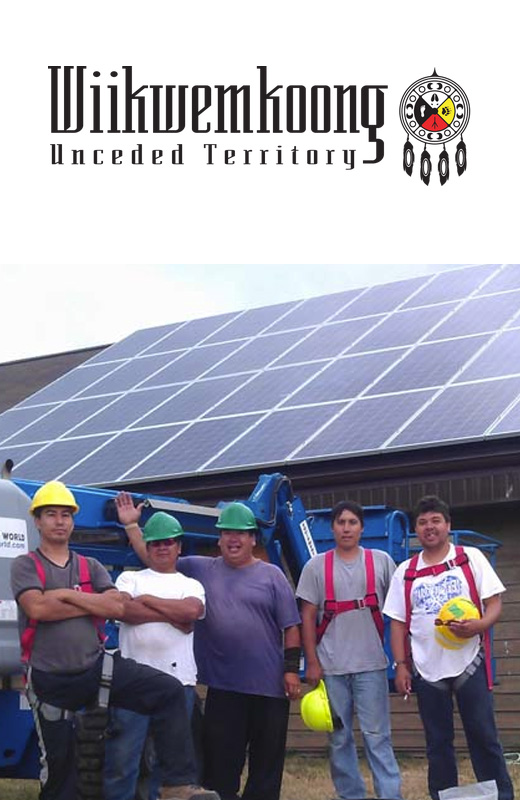
The General Manager’s main responsibility was to acquire a legal team experienced in renewable energy to help negotiate the legal partnership agreements, which also included the use of our six trained solar installers.
Once the negotiations were complete, our role in the larger FIT2 development is mainly to financially benefit from the projects and to stay abreast of the projects. Our partner who has the technical expertise and capacity is responsible for the daily activities, securing financing and construction of the projects.
How long did it take?
Q5: How long did it take from the start of your application to the approval?
The application from start to finish took approximately six months.
We started in early January 2013 and received approval in late August 2013. The construction of the first project was completed in October 2014.
Involvement in the project
Q6: What involvement did you have in the project?
As indicated previously, our involvement was to benefit from the project financially.
Connection to the grid
Q7: How did your project connect to the grid?
The electrical capacity in Wikwemikong will not allow us to access the grid. However, eleven projects in Southern Ontario do not have these limitations.
How did you educate the Chief and Council?
Q8: How did you educate the Chief and Council?
It was not a matter of educating the Chief and Council, as renewable energy is an economic priority and is supported by the Council.
We do provide briefing papers to the Chief and Council on specific projects, and by creating a position specific to energy planning, we were able to increase EDC’s capacity and knowledge in the energy sector.
With the added capacity of the Energy Planner to the team, the Energy Planner, Business Development Advisor and General Manager can keep the Chief and Council appraised of opportunities in the renewable energy industry.
Green energy benefits
Q9: How did you highlight green energy benefits?
When presenting to the Chief and Council the benefits of green energy, we use the RetScreen Analysis, a tool that demonstrates the long-term economic benefits, the rate of interest on the investment, the self-sufficiency aspects of energy independence, and the reduction of our carbon footprint.
Chief and Council's reaction and feedback
Q10: How did the Chief and Council react? What was their feedback?
Wikwemikong’s Chief and Council have supported this economic priority, are very positive in our renewable energy endeavours and are receptive to the long-term benefits of solar energy. From our initial meetings, the Chief and Council felt comfortable enough to create a Band Council Resolution. This resolution allowed us to create a strategy to develop new solar projects as well as set aside funding to support these initiatives.
They have financially supported eleven micro-fit projects in Wikwemikong, as well as setting aside funds to support larger FIT projects.
Biggest learnings
Q11: What were the most significant learning curves that you experienced? What would you do differently?
For the local projects that we pursued and before investing in feasibility studies and wind resource testing, we should have determined our local distribution system. We do have the land, wind and solar resources; however, without the capacity on the grid, we cannot pursue the larger projects. Our only recourse is to continue to lobby the Ontario Government and Hydro One to include upgrades in the Integrated Power System Plan.
Not to say we are totally dissatisfied with the partnership that was created for the FIT2 round. We do have concerns; we were under time constraints and deadlines. Within a two-week timeframe, the general and limited partnership agreements were negotiated, the corporations were created, and applications were submitted to the OPA.
We feel if we had stayed abreast of the FIT announcements, it would have allowed us time for proper planning and time to seek out a partner; this way, we would have determined the capacity of the partner. With the time constraints, we had to trust our consultants.
Resources and further reading
Wikwemikong used the RETScreen analysis tool to present the benefits on the project to the Chief and Council. The tool (RETScreen) is available free from Natural Resources Canada.
About the tool: The RETScreen software is a unique decision support tool developed with the contribution of numerous experts from government, industry, and academia. The software, provided free-of-charge, can be used worldwide to evaluate the energy production and savings, costs, emission reductions, financial viability and risk for various types of Renewable-energy and Energy-efficient Technologies (RETs).
Wikwemikong Unceded Indian Reserve is one of the ten largest First Nation communities in the Turtle Island. It is situated on the eastern end of Manitoulin Island and shores of Georgian Bay. Get more information about the community here: http://www.wikwemikong.ca