
Case Study: Wind FIT
Scan to join — no app, no login. You present the slides; questions pop as live polls.
Join at
…
Room code
····
0 joined
Wind FIT at M'Chigeeng
About Grant Taibossigai
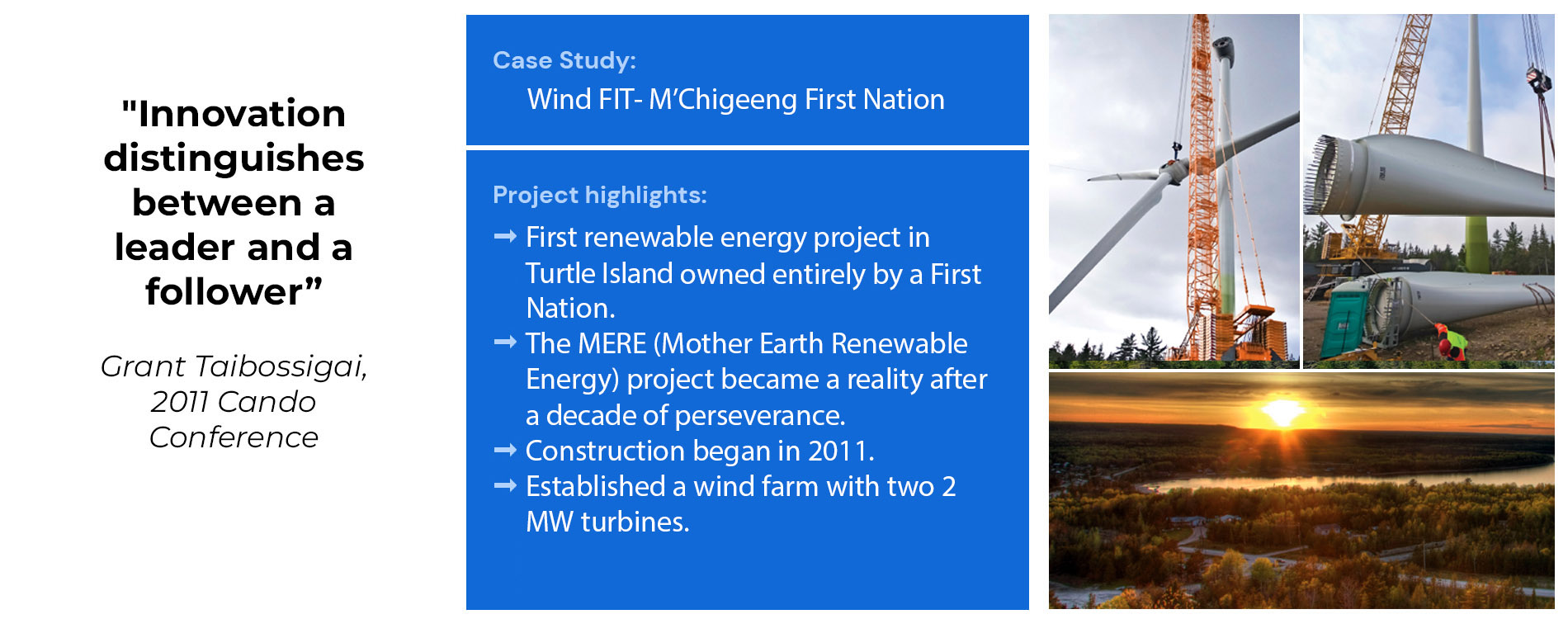
Grant Taibossigai received the Economic Development Officer of the Year Award at The 18th Cando Annual National Conference in 2011.
Grant has worked for M’Chigeeng First Nation for over 30 years as the Economic Development Officer and MERE Wind Farm Interim Project Manager. He is a valued and critical driver of economic development in the M’Chigeeng First Nation.
Under Grant’s leadership, expertise and teamwork-based enthusiasm, M’Chigeeng First Nation made great strides in building a sustainable economic base that provides opportunities and prosperity for the M’Chigeeng First Nation citizens through innovative projects such as the Mother Earth Renewable Energy wind farm project.
His views on this project are on the screens that follow.
How long did the project take?
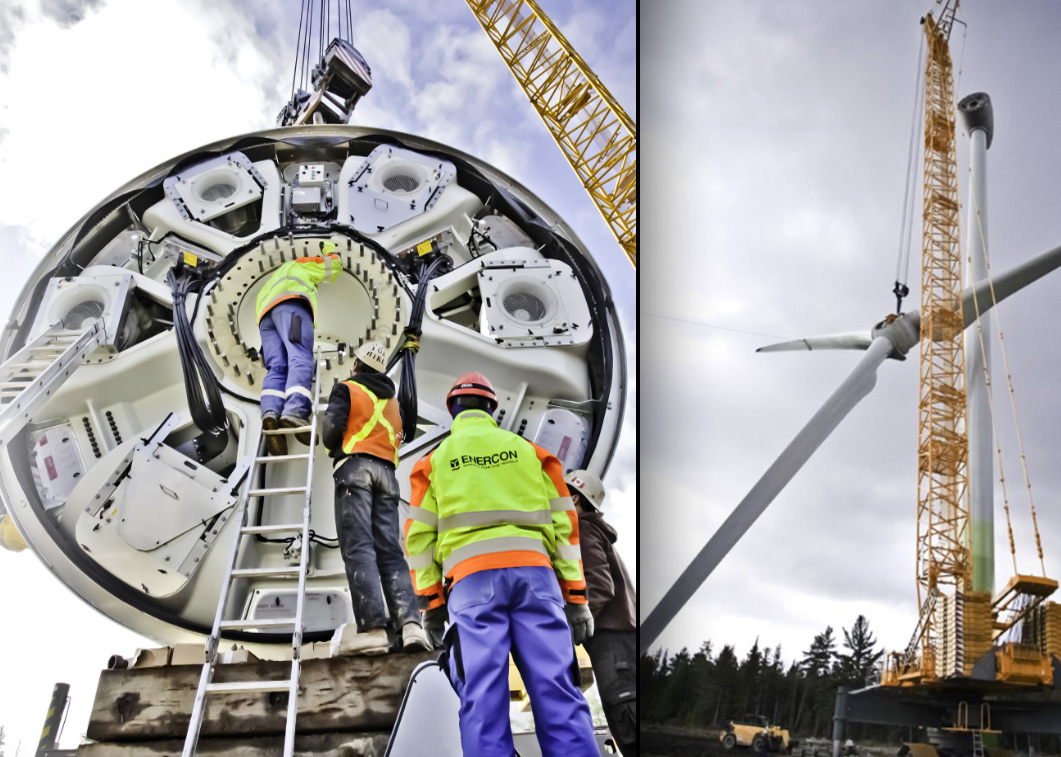
This project took over a decade from when it was first thought of in 2001 to its completion.
Being the first Indigenous Renewable project, M’Chigeeng First Nation ventured into uncharted territory. The journey brought up many challenges, creative solutions, unique collaborations and even changes in legislation.
What was the timeline?

Click on each button to view the project timeline.
2001 - 2004
The Wind energy vision began in 2001, followed by the 1st community meeting the next year. In 2003, Meteorological testing began. The 2nd community meeting took place the year after, in 2004.
2005
In 2005, the Cooperative Structure was established.
2006
Feasibility studies started in 2006. The 3rd community meeting was conducted in the same year, and continued support was established.
2007
We completed the environmental assessments in 2007. However, the project suffered a setback when the Hydro connection was denied. We began our connection lobbying campaign soon after.
2008
In 2008, the council adopted the project's scope change, deciding to build 2 wind turbines on Band-owned land.
2009
Lobbying efforts resulted in Ontario passing the Green Energy and Economy Act in 2009, an important step in removing barriers to connections and providing access to funding.
2010
We were awarded the FIT contract in 2010. In the same year, the M.E.R.E corporation was formed, and we submitted applications for the Aboriginal Renewable Energy Fund.
2011
In 2011, the Ontario Finance Authority Loan Guarantee was received. We began the pre-construction tenders, financing was approved, and we got the long-awaited Notice to Proceed in March. Construction could finally start!
What kind of legislative changes did M'Chigeeng help bring about?
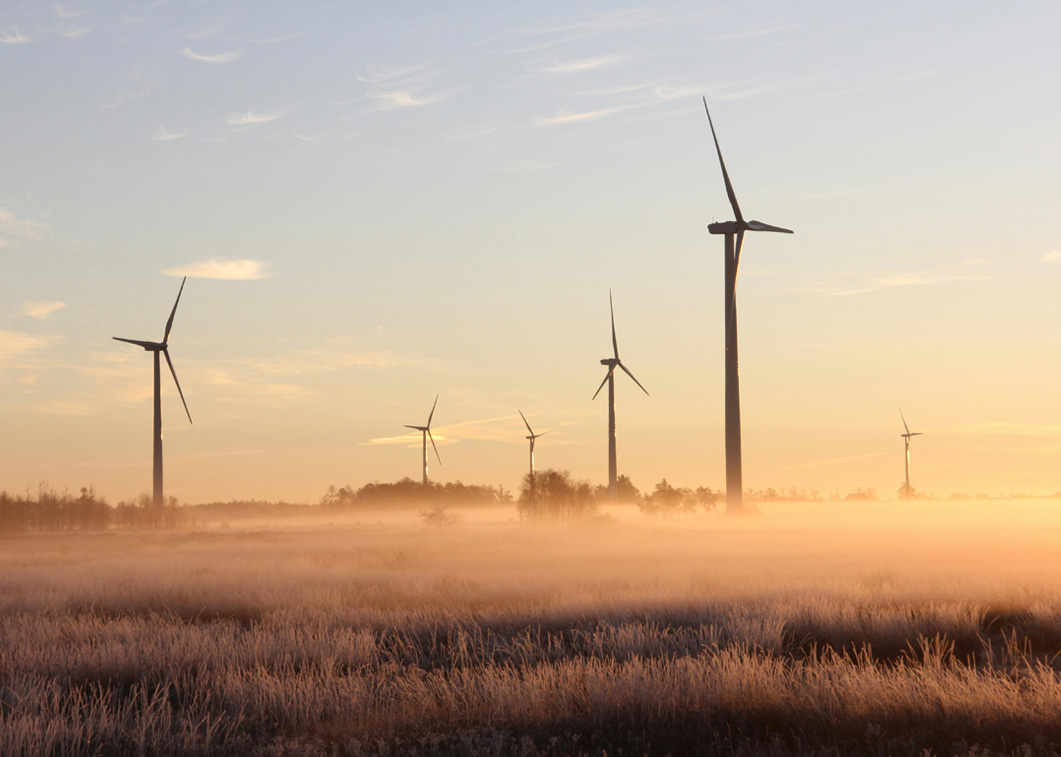
After years of lobbying by the First Nation Energy Alliance (of which M’Chigeeng was a key member) and other provincial stakeholders, Ontario passed the Green Energy and Economy Act in 2009.
The Act is the only one of its kind worldwide that promotes Indigenous participation, with measures that include an Aboriginal Renewable Energy Fund, Aboriginal Energy Partnerships Program and price incentives for projects that demonstrate Aboriginal participation over and above the feed-in tariffs being paid for renewable energy.
Another important feature is that the government rewrote the connection impact assessment model that was a barrier to grid connection in the past, and selected renewable energy projects for grid connection projects based on “readiness.”
Why did M'Chigeeng persevere despite the long timeline?
There were three key reasons why M’Chigeeng persevered despite the long timeline.
Economic: we need to earn a living from our lands while being respectful of Mother Earth.
Employment: we set up a series of training programs with the Sault College to grow the skills base in the community. We have more plans to harvest the wind and wish to provide trained and skilled workers to help them to succeed.
Self-reliance: the Chief and the project team were determined to show young people that when M’Chigeeng set their mind to achieve something, they can get it done, provided they are willing to learn and to work.
What is M.E.R.E? Why was it established?
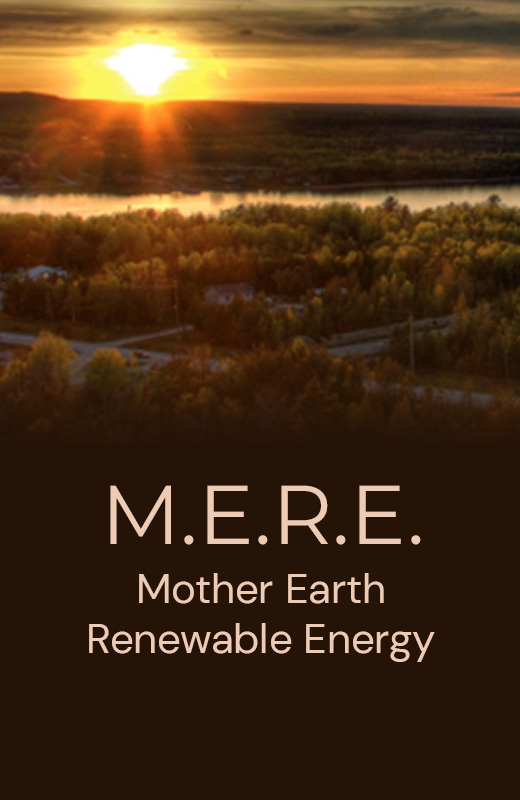
M.E.R.E. stands for Mother Earth Renewable Energy.
M.E.R.E General Partner Inc. is 100% owned by M’Chigeeng First Nation, and was formed in 2010 by Chief and Council. This corporate structure allows M’Chigeeng to comply with the Ontario Finance Authority’s requirement for a registered corporation to be set up as the borrower for bank financing and guarantee recipient.
Chief and Council, as the sole shareholder in the M.E.R.E. corporate structure, will advise and provide directives to the board of M.E.R.E.
What is M.E.R.E guiding principle and long-term vision?
The guiding principle for M.E.R.E is to engage in profit-making ventures and distribute the net profits to M’Chigeeng First Nation.
In the long run, M.E.R.E will also be responsible for a greater vision as mandated by the Chief and Council through
Building a green energy economy.
Increasing the standard of living.
Take bold and concrete steps to improve the quality of life of Band members.
Where were the wind turbines situated?
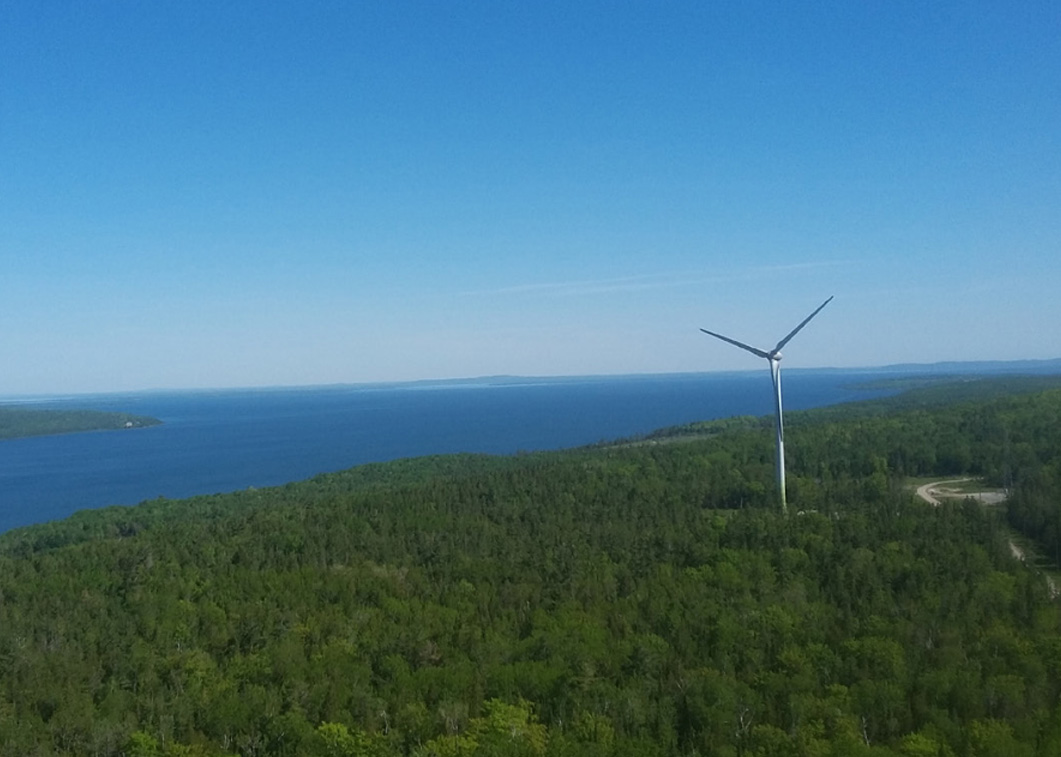
The turbines are situated on band-owned land atop the prominent ridge on the east shore of West Bay.
The wind resource is among the strongest in Ontario owing to the height above the lake level of the ridge as well as the exposure to the dominant westerly and northerly winds.
Who was involved in the planning and construction of the wind turbines?
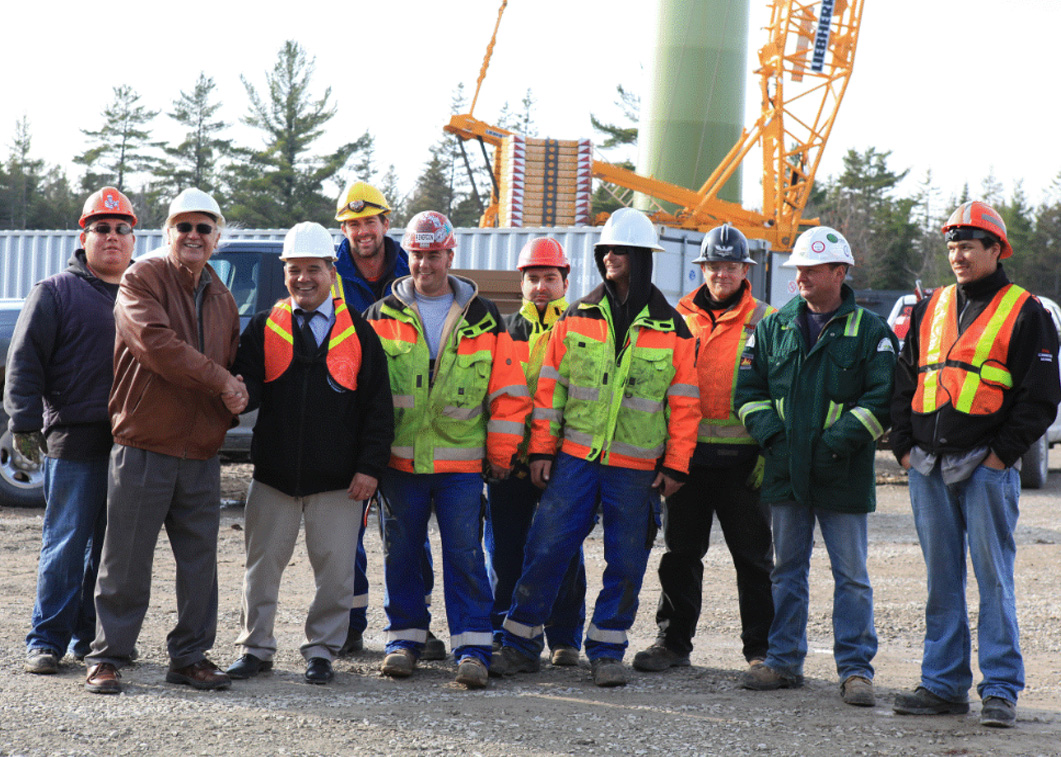
The consultant for this project was Graham Findlay, 3G Energy. Graham had been instrumental in working with MERE Co. staff and Board of Directors on the project's development.
The others involved in various stages of development are as follows:
Enercon – foundation, turbine tower, blades, generator, electronics
JJ Pole Line – collector line, poles, cable, fused switches and disconnect equipment
Switching Station contractor – metering equipment, communication equipment, relay equipment and switches.
Ranking Construction – foundations
Lacroix Construction – road and foundation excavation
Hydro One – grid connection and electrical safety protection equipment, control signals
Dennis Corbiere Logging – road and pole line clearing and brushing
Did you use community members for the installations?
Did local businesses benefit? The contractor hired community members to work on the jobsite.
They also dealt exclusively with local businesses wherever possible. For example:
They used approximately 900 cubic metres of concrete supplied and transported by the M’Chigeeng Lafarge branch
Relied on approximately 250 loads of backfill from Lloyd’s & Son
Relied on local contractors such as Tyler, Curtis and the entire crew of Corbiere Brothers
Make use of local suppliers as much as possible
How did the project help employment in the community?
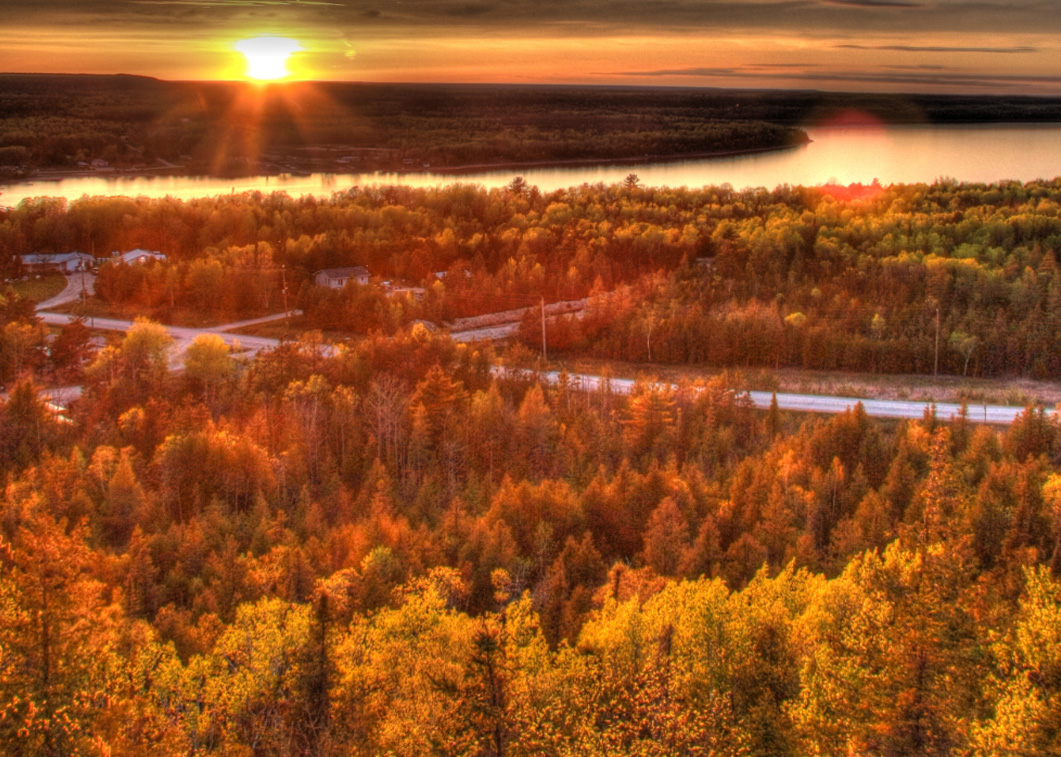
The MERE project will create over 100 local jobs and provide opportunities for M’Chigeeng contractors to assist with road construction, tree felling & clearing, security, landscaping, sanitation and meal & hospitality, to name a few projects associated with the construction phase of the wind farm.