
Case Study: Hydro FIT
Scan to join — no app, no login. You present the slides; questions pop as live polls.
Join at
…
Room code
····
0 joined
The Gitchi Animki (White River) project
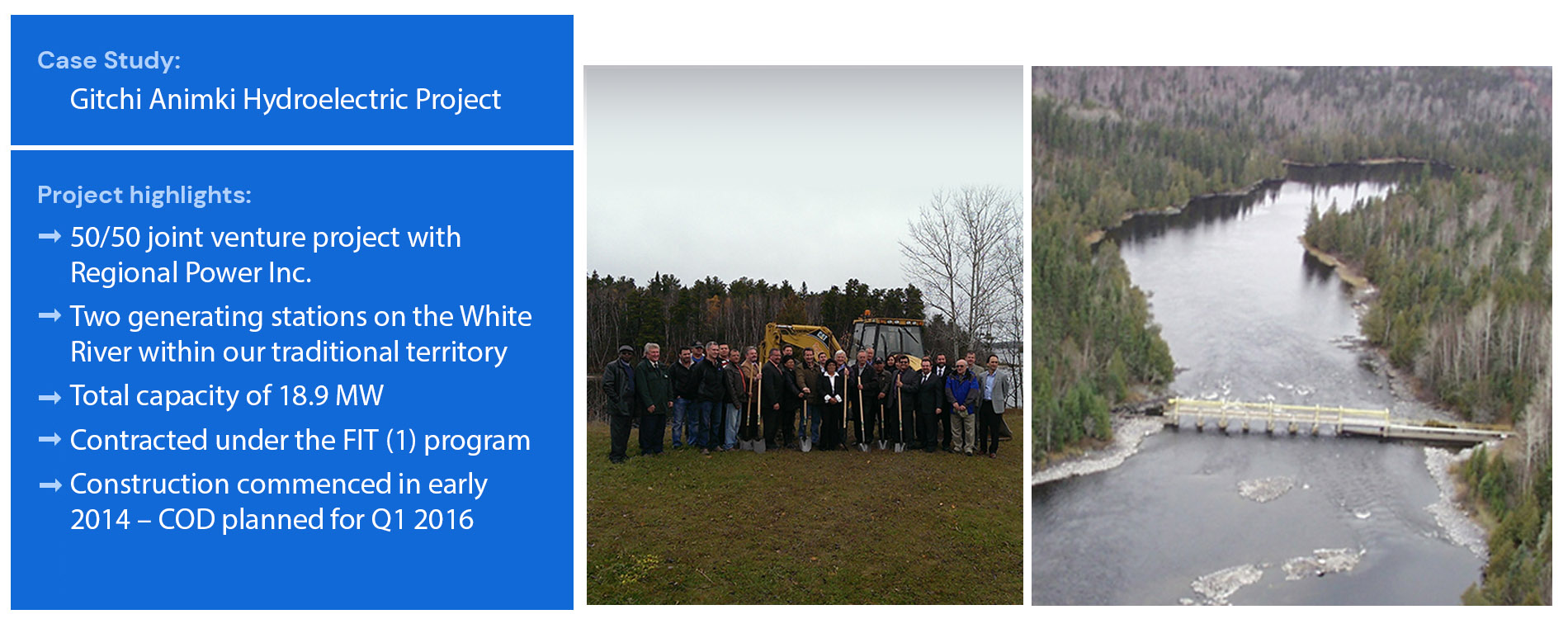
The Project
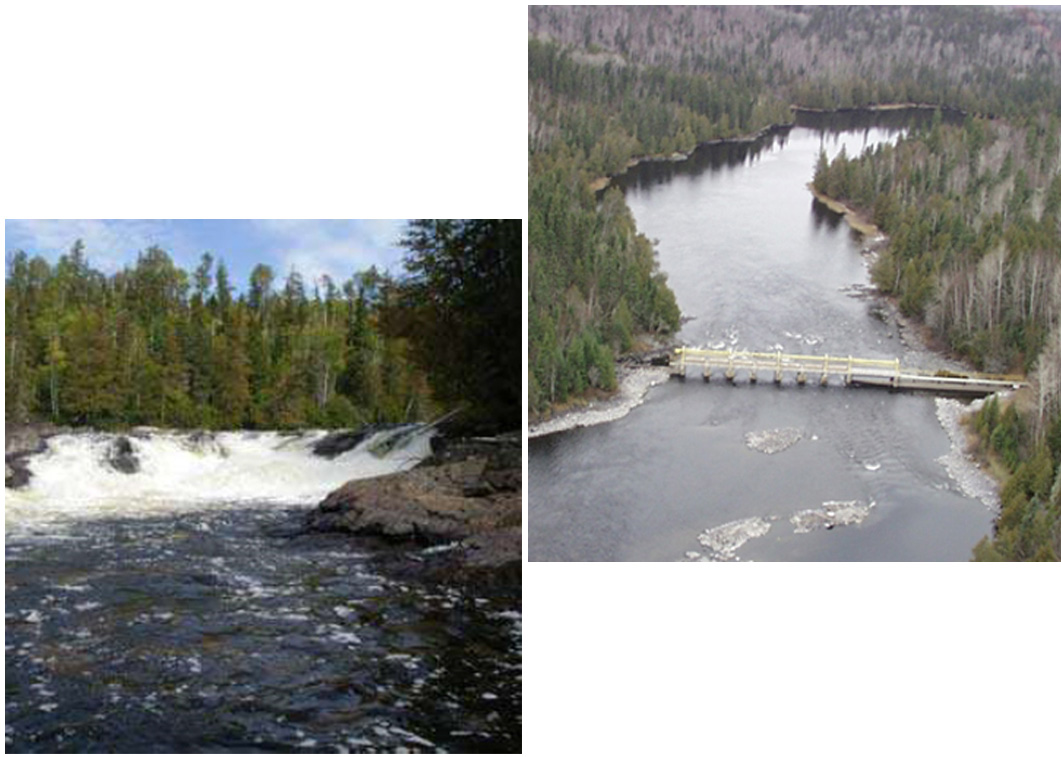
The Pic Mobert Hydro Power Joint Venture, a partnership of subsidiary companies of the Pic Mobert First Nation and Regional Power Inc, undertook the Gitchi Animki (White River) project.
The Gitchi Animki Hydroelectric Project consists of two waterpower generating stations with a combined generating capacity of 18.9 MW, Gitchi Animki Bezhig and Gitchi Animki Niizh. Gitchi Animki Bezhig, once completed, will also replace the function of an old Ministry of Natural Resources and Forestry regulating dam that manages lake levels and flood flows on White Lake.
The development is located in the traditional territory of the Netamasakomik People of the Pic Mobert First Nation and was one of the first contracted under the Ontario Power Authority’s Feed-in Tariff Program.
Dilemmas Faced
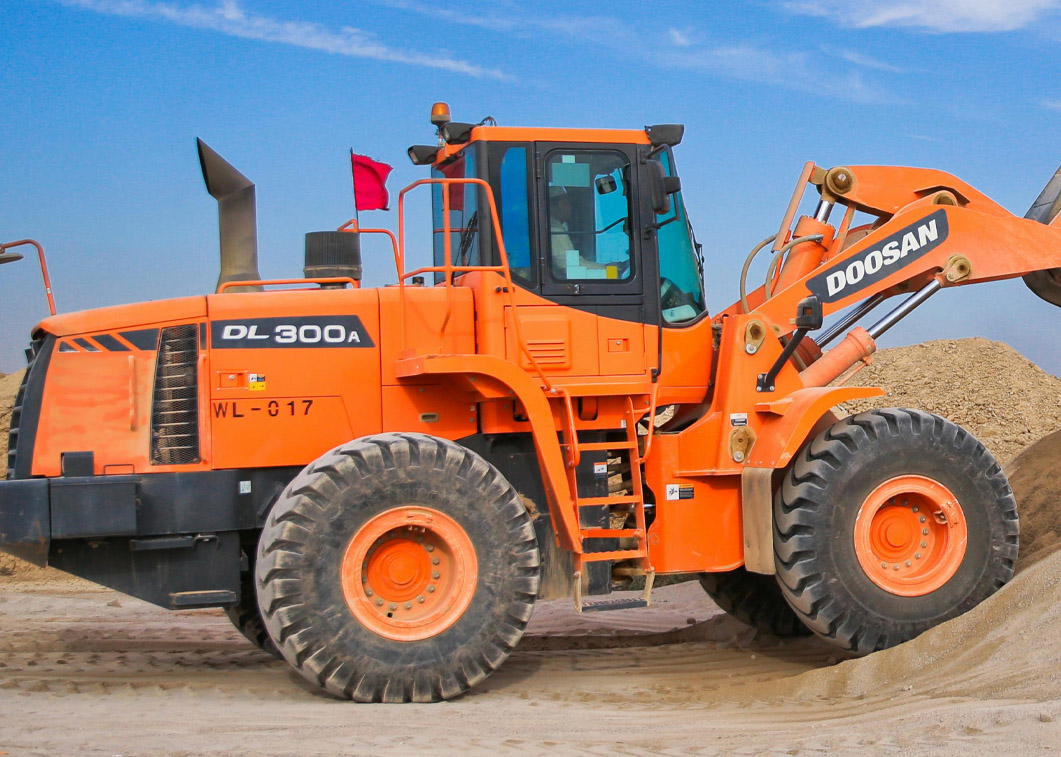
Development permanently changes the land.
Dilemma – between our role as developers of our local economies and our duty as keepers of the land.
We came to understand early on that development would impact traditional activities and elders' values.
Resolutions
How did you resolve this? We settled on the fact that:
Renewable energy is a sustainable alternative to polluting coal and nuclear
The longevity of the asset (100+ years) would yield benefits for many generations
This was a generally favourable means of generating own source revenues that would address other initiatives to reduce poverty, improve living standards and provide housing.
We decided to build the best vs. the biggest project:
We considered and balanced social, environmental, technical and economic concerns.
We decided to build an 18.9 MW even though a 100+ MW project was possible.
This stimulated innovation – e.g. compensation turbines (supported by a $1 million grant from MOECC – Showcasing Innovation in Water).
Equity
Did the community decide to be major equity owners or accept a royalty from the developers? The community decided to be major equity owners.
We are logical owners – who else will be here in 100 years?
Unprecedented opportunity to be in the "driver's seat" for a significant resource development.
Unprecedented opportunity – obligation to maximize the long-term benefits.
Utilize creative financing & structures to minimize liabilities & maximize benefits – e.g. LP structure.
Options to increase participation in ownership and operation of the project over the long term.
Including O&M contract after several years.
Benefits of being Hands-on
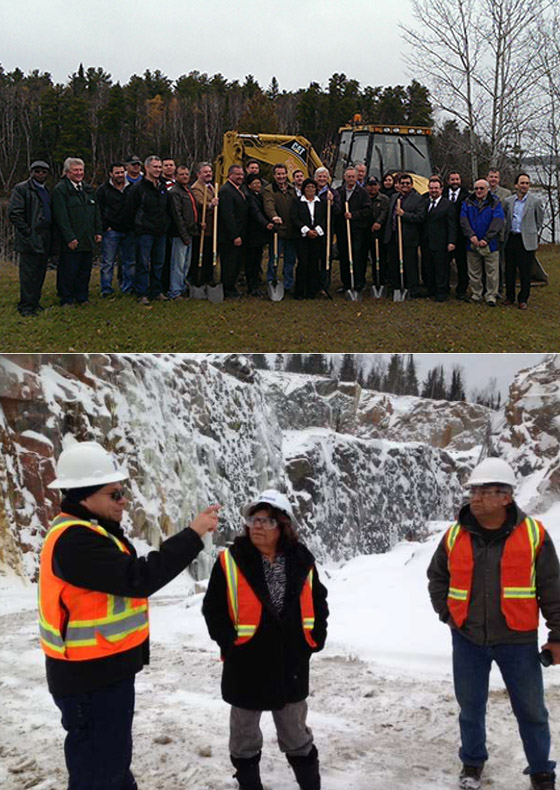
As owners and investors, it was essential that we understand and be engaged in all aspects of the business, such as Technical, Environmental, Regulatory, and Financing.
The project created long-term employment in the community. Some of the jobs created were Band Council lead/champion, Project liaison, Construction liaison, and Board of Directors.
Besides capacity building process, we understand other aspects of such a project, such as:
Understanding the land and land use issues. Managing stakeholder interface – local vs. absentee owners Raising working capital through funding programs Breaking through bureaucratic hurdles
Timeline

We have taken over 22 years. When we started, all we had were a few dots on a map with the development rights awarded in 1993.
We began actively pursuing this in 2000.
Took two years to get oriented and decide to pursue the opportunity Took two years to define the project Another two years to find suitable locations to construct on Another two to hammer out a partnership Five years to complete the Environmental Approvals Three years to design, tender & retender Construction will be complete in 2015-16
We had a clear vision. We were understood and supported by a dedicated and relentless Chief and Council.
We had a credible, trusted and ferociously committed champion- in this case, Deputy Chief Wayne Sabourin.
Funding Programs

We accessed the following funding programs:
- FIT 1 Contract
- Aboriginal Adder
- Aboriginal Renewable Energy Fund
- Aboriginal Loan Guarantee Program
Others programs:
- NOHFC
- Industry Canada/FedNor
- MOE Showcasing Innovation in Water
- AANDC Community Economic Opportunities
Funding Challenges

We accessed a number of challenges during the funding process. Ill defined, inefficient approvals processes Conflicting mandates (development vs. protection) Absence of authority and accountability in front line personnel Mid-stream changes in rules and policies Endangered species Methyl Mercury Adaptive management
Overcoming Funding Challenges
Through the combined forces of: Tenacity and a will to succeed The constant push of our project chief, Wayne Sabourin Strong collaborative partnerships with stakeholders Leveraging experts and creative thinking The political capital of a First Nation and an effective Chief
Key Learnings

The only way to survive this roller coaster is: To have an experienced, knowledgeable partner who shares a commitment to the long-term vision Has very deep pockets (our partner is a subsidiary of Manulife Financial) and is financially able to ride out the process Mechanisms to fund and protect the community’s financial obligations to avoid dilution A long-term focus with flexibility in adjusting short-term expectations in favour of long-term returns